 >
>- Selamat datang di website PT Fiqry Jaya Manunggal. Semoga anda senantiasa sehat afiat. Kami siap melayani anda

Coal Dust Explosion
Rp 6.350.000| Stok | Tersedia |
| Kategori | 100+ Pelatihan Engineering & Migas Profesional 2026 | Sertifikat Resmi, Power Generation, Q-HSE |
Trainer: Ir. Marhan Saub - Practitioner
Bandung, 6-8 Mei, 2026
Bandung, 8-10 September, 2026
Bandung, 8-10 Desember,, 2026
Coal Dust Explosion
Background & Objectives:
Coal dust explosion is one of the most hazardous risks in coal-fired power plants & coal handling facilities. Fine coal particles are highly combustible & under certain conditions, can lead to catastrophic explosions when exposed to ignition sources. The risk becomes even more critical as operations scale up & involve large quantities of stored or transported coal, often in semi-enclosed environments. A comprehensive understanding of coal dust characteristics, explosion mechanisms & preventive strategies is essential to ensure plant safety & avoid operational disruptions or major damage.
This training program is designed to provide participants with an in-depth understanding of coal dust explosion hazards, relevant safety standards (both local and international), and best practices for prevention and mitigation. Over three days, the course will combine technical theory with real-world case studies, covering topics such as ventilation systems, housekeeping, inerting, ignition control, and explosion suppression systems. The program aims to equip participants with practical skills to assess risks effectively and implement robust control measures tailored to coal-fired operations.
On this training you should:
– Understand and be able to explain the types of risks, causes of risks, and efforts to prevent and control flying dust, spontaneous combustion, and coal explosions due to dust and gas.
– Be able to prevent and reduce risks related to coal dust explosions
Recommended Participants:
– CHP Patrol, Plan Operator, Technician and HSE.
– Supervisor and UC/AUC Employee who working in the Hazard area.
Course Outline:
1. Coal Classification and Characteristic
2. Combustion Process
3. Coal Ash and Dust
4. Coal Dust Accumulation
5. Explosion
6. General Precautions
7. Abnormal condition and emergency procedure
8. Inerting steam and firefighting system
9. Dust prevention and control
10. Explosion prevention and control
11. Case Studies & Discussion
PRACTICE USING SIMULATORS:
– Explosion impact control (Explosion Box)
– Explosion prone temperature control (Explosion Box)
OBSERVATIONS:
a. Control of Spontaneous Combustion Symptoms:
– Observation of coal stockpile for compaction process: Average Pile or Compacting
– Observation of coal unloading area with excavator
b. Control of Fugitive Dust:
– Observation of fugitive dust control in dust suppression area, hopper, transfer tower
c. Cleaning of Dust Deposits:
– Observation of the dust deposit cleaning process in related work areas
d. Prevention of Spontaneous Combustion:
– Field observation for heat and gas detection in areas where spontaneous combustion occurs
DELIVERY METHOD:
– Lecture
– Discussion
– Observation & Case Study
– Video Simulation Coal Dust Explosion
About The Course Leader
Marhan Saub – Practitioner
Coal Dust Explosion

Advanced Centrifugal Compressor
BACKGROUND: This training course will be presented as PowerPoint Presentations, discussions drawn from many years of operation and maintenance experience working around the world. Questions and examples based on past experiences will be used throughout this presentation and participants are encouraged to ask questions and discuss examples from their own experiences. OBJECTIVES: This Centrifugal…
*Harga Hubungi CS
Safety Shutdown System
BACKGROUND: Safety Shutdown Systems (SSS) are critical in ensuring the safe operation of industrial plants, machinery, and equipment. These systems are designed to automatically detect hazardous conditions and initiate a controlled shutdown to prevent accidents, equipment damage, or catastrophic failures. In industries such as oil and gas, manufacturing, and power generation, where processes often operate…
Rp 7.950.000
Mechanics of Engineering Materials
BACKGROUND: Engineering materials are the foundation of all mechanical and structural designs. Understanding the behavior and properties of materials under different loading conditions is critical for designing safe, efficient, and durable structures and components. The study of the mechanics of engineering materials provides engineers with the tools to predict material performance, analyze failures, and select…
Rp 7.950.000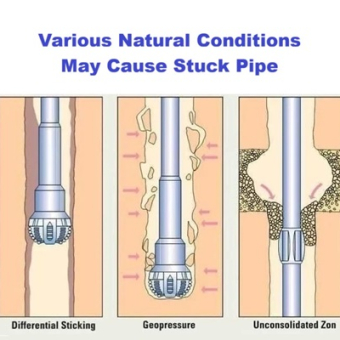
Stuck Pipe Prevention
Background: Stuck pipe is one of the most critical and costly problems in drilling operations across the Oil & Gas and Geothermal industries. With more complex well trajectories, smaller hole sizes, and an industry push to “drill to the limit,” the risk of stuck pipe incidents has grown significantly. Although rigs are now supported by…
Rp 10.950.000
Manajemen Transisi Energi ke Arah Energi Terbarukan
BACKGROUND: Manajemen Transisi Energi (MTE) adalah program penelitian baru yang mengeksplorasi transisi energi dari berbagai sudut dan perspektif, menekankan pada aspek perilaku, strategi, teknologi, sosial, ekonomi, politik, dan aspek regulasi transisi menuju sistem energi yang lebih berkelanjutan dan tangguh. Transisi energi dianggap sebagai fenomena sistemik dan multi-level, di mana transisi tertanam dan tergantung pada hubungan…
Rp 7.950.000
Advance Pipeline Construction and Operation
BACKGROUND: Onshore pipeline facilities play a strategic role in transporting hydrocarbons safely and efficiently from production fields to processing and distribution points. The success of a pipeline system is determined not only by its design quality, but also by the effectiveness of construction management practices and the reliability of day-to-day operations. Inadequate integration between design,…
Rp 7.950.000