 >
>- Selamat datang di website PT Fiqry Jaya Manunggal. Semoga anda senantiasa sehat afiat. Kami siap melayani anda
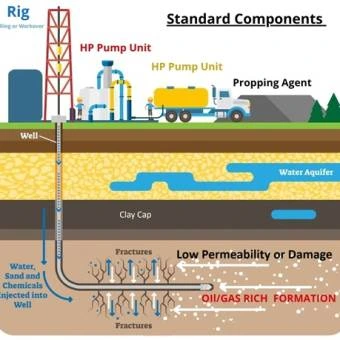
Hydraulic Fracturing
Rp 13.000.000| Stok | Tersedia |
| Kategori | 100+ Pelatihan Engineering & Migas Profesional 2026 | Sertifikat Resmi, Oil & Gas |
05 - 07 Januari 2026, Bandung
06 - 08 Juli 2026, Bandung
Instructor: Prof. Dr.-Ing. Bonar Tua Halomoan Marbun
Hydraulic Fracturing
Hydraulic Fracturing (HF) is a reservoir stimulation to enhance oil and gas well productivity. In addition to its application in low-permeability formations, HF is also essential when formation damage occurs during drilling or when productivity declines due to water intrusion and other factors. This technology has become a critical component in the development of both conventional and unconventional reservoirs. However, the complexity of HF design and execution requires in-depth technical understanding to ensure safe and effective outcomes. Therefore, comprehensive training is essential to enhance personnel capabilities in selecting candidate wells, designing, and implementing HF treatments efficiently.
This training shall be able to equip participants with both technical knowledge and practical skills throughout the HF lifecycle—from reservoir evaluation to field execution. Through a case-based and hands-on approach, the program will help participants understand design parameters, use of simulation software, and QA/QC aspects of fracturing. Ultimately, participants are expected to contribute directly to increased production and improved operational efficiency. Soft copies of the training material are given to audience during the course for their future reference. The goal of the course is to increase the participant’s knowledge of stimulation services, to understand service-specific technical design, and operational considerations.
Participants will learn how to:
1. Understand and apply the rock mechanics/in-situ stress aspects of fracturing, reservoir aspects of fracturing (How much fracture do I need?), fracture mechanics, fracture design variables, perforating for fracturing, and fracture diagnostics.
2. Identify the data requirements and steps that have to be implemented to properly design hydraulic fracturing treatments
3. Evaluate and select stimulation candidates, and apply hydraulic fracturing concepts to various types of reservoir conditions to optimize well productivity
4. Recognize opportunities for substantial production improvements by application of effective hydraulic fracturing treatments
5. Collect pertinent well data and information needed to plan, design, implement, and evaluate fracturing treatments for the most common types of reservoirs
6. Realize the strengths and limitations of hydraulic fracturing theory as it relates to field applications
7. Play active roles in the different phases of typical hydraulic fracturing treatments
Recommended Participants
Production, reservoir, and drilling engineers, and others who have a basic understanding of hydraulic fracturing and need to enhance their knowledge about fracturing concepts and applications.
Laptops are required for this course. The instructors text, Hydraulic Fracturing, will serve as course material. Electronic PDF of presentation will also be given; participants must have Adobe read/write in order to take notes in electronic files.
Course Outline
1. Introduction to the fracturing process and mechanics
2. Fracture design concepts and methodologies
3. Fracturing fluid additives and proppant
4. Strengths and limitations of fracturing applications
5. Production increase
6. Factors involved in field implementation
7. Acid vs. proppant fracturing
8. Frac packing concepts
9. Water-fracking concepts
10. Horizontal well fracturing
11. QA/QC of fracturing treatments
12. Methods to evaluate fracturing treatment success
About The Course Leader
Instructor: Prof. Dr.-Ing. Bonar Tua Halomoan Marbun
Hydraulic Fracturing

Applied Reservoir Engineering
BACKGROUND: Petroleum Engineering practically covers: Production Operation, Drilling, and the core (Reservoir Engineering). This training represents the core of the reservoir engineering program. Numerous engineering practices are covered from fluid & rock properties to simulation & field development planning. As the core, Reservoir Department is the only one that normally cares about the live time…
Rp 10.950.000
Advance Project Economics & Risk Analysis Strategic Planning & Portfolio Management of Oil and Gas Upstream Business in Indonesia
BACKGROUND: The oil and gas industry in Indonesia is navigating a transformative period, characterized by evolving regulatory frameworks, advancing technologies, and shifting market dynamics. As the country aims to enhance its energy security and sustainability, the role of advanced project economics and risk analysis has become increasingly crucial. Understanding the intricacies of Production Sharing Contracts…
Rp 14.500.000
Gas Development and Commercialization
BACKGROUND: Natural gas has become an increasingly important energy source. Successful Gas Development and Commercialization demands careful integration of technical, economic, regulatory, and commercial considerations to ensure profitability and sustainability. Not only a cleaner alternative to coal and oil but also as a strategic commodity in the global energy market. Developing gas field requires a…
Rp 7.950.000
Drilling Problem Analysis
BACKGROUND: Pengeboran sumur minyak dan gas sering kali menghadapi tantangan yang tidak terduga, meskipun telah dilakukan perencanaan yang matang. Drilling Problem Analysis adalah kunci keberhasilan operasi pengeboran, yang melibatkan kemampuan untuk mengidentifikasi dan mengantisipasi potensi masalah serta merancang program pengeboran yang efektif. Pelatihan ini dirancang untuk membekali peserta dengan pengetahuan mendalam tentang analisis masalah pengeboran,…
Rp 14.950.000
Introduction to Offshore and Subsea Drilling
Background: Offshore and subsea drilling are among the most complex and high-risk operations in the upstream oil and gas industry. Compared to onshore drilling, offshore and deepwater operations involve harsher environments, higher costs, sophisticated technologies, and significantly greater safety and environmental risks. From jack-up rigs in shallow water to floating rigs and subsea systems in…
Rp 9.950.000
Process Safety Management
BACKGROUND Process Safety Management (PSM) atau Manajemen Keselamatan Proses (MKP) dilaksanakan oleh perusahaan-perusahaan atau industri kimia/ petro-chemical, minyak & gas bumi (migas) setelah beberapa kejadian fatal yang telah banyak menelan korban jiwa dan harta benda seperti kasus Flixborough (Juni 1974), Seveso (Juli 1976), Bhopal (Desember 1984), Piper Alpha (Juli 1988), dan lain sebagainya . Dalam…
Rp 7.950.000