
- Selamat datang di website PT Fiqry Jaya Manunggal. Semoga anda senantiasa sehat afiat. Kami siap melayani anda
 click image to preview
activate zoom
click image to preview
activate zoom
Petroleum Resources Management System
| Stok | Tersedia |
| Kategori | Manajemen, Oil & Gas |
Petroleum Resources Management System
Background:
The Petroleum Resources Management System (PRMS) is an internationally recognized framework used to classify, evaluate, and report petroleum resources and reserves in a consistent and transparent manner. PRMS goes beyond volumetric estimation by integrating technical maturity, commercial viability, risk, and uncertainty into a project-based decision framework.
For professionals outside the subsurface discipline, PRMS provides a common language that bridges geology, engineering, commercial, and management perspectives. A sound understanding of PRMS is essential for supporting field development planning, investment decisions, portfolio management, and communication with internal and external stakeholders throughout the petroleum project lifecycle.
Objectives:
• Understand the philosophy, structure, and key principles of PRMS
• Explain the classification of petroleum resources and reserves in accordance with PRMS
• Recognize the relationship between PRMS classification and project maturity
• Interpret reserves and resources statements from a non-reservoir perspective
• Understand the role of commerciality, risk, and uncertainty in resource classification
• Apply PRMS concepts to support technical, commercial, and management decision making
Recommended Participants:
• Asset / Project Manager
• Production, Facilities, Process, Drilling, & Petroleum Engineer
• Commercial, Planning, Strategy, & Business Development
• Government / Regulator / Auditor (non-reservoir background)
Course Outline:
Fundamental PRMS & Resource Classification
1. Introduction to PRMS
• History & organizations behind PRMS (SPE, AAPG, WPC, SPEE, SEG)
• Why PRMS matters for industry & business
• PRMS vs “reserves reporting mindset”
2. PRMS Key Principles
• Project-based classification
• Commerciality
• Risk & uncertainty
• Probability concepts (P90, P50, P10)
3. Resource Classification Framework
• Total Petroleum Initially In Place (TPIIP)
• Discovered vs Undiscovered Resources
• Movement of volumes across project maturity
4. Prospective Resources
• Geological chance of success (GCoS)
• Exploration risk elements
• Volumetric uncertainty
Contingent Resources & Reserves
1. Contingent Resources
• Definition & characteristics
• Sub-classes (Development Pending, On Hold, Unclarified, Not Viable)
• Common contingencies:
o Economic
o Regulatory
o Technical
o Infrastructure
2. Reserves Classification
• Proved (1P)
• Probable (2P)
• Possible (3P)
• Development status: Developed vs Undeveloped
3. Commerciality & Economic Evaluation
• Economic cut-off & project sanction
• Role of fiscal terms (PSC, cost recovery, gross split)
• Price, cost, and sensitivity impact
Application, Reporting & Business Perspective
1. PRMS in Project Lifecycle
• Exploration → Appraisal → Development → Production
• Impact of technical maturity on classification
• Role of subsurface & surface integration
2. PRMS Reporting & Governance
• Annual reserves & resources reporting
• Internal vs external reporting
• Reserves audit overview
3. PRMS for Decision Making
• Portfolio management
• Farm-in / farm-out
• M&A and asset valuation
• Risked vs un-risked volumes
4. Integration with Other Frameworks
• PRMS vs SEC
• PRMS vs UNFC
• Alignment with corporate planning & strategy
About The Course Leader
Prof. Dr.-Ing. Bonar Tua Halomoan Marbun
Petroleum Resources Management System

Managing Upstream Oil/Gas Assets
Background Manajemen aset hulu migas merupakan aspek strategis yang menentukan keberhasilan pengelolaan sumber daya energi nasional. Dalam konteks global yang terus berubah—mulai dari fluktuasi harga minyak, perubahan kebijakan energi, hingga transisi menuju energi bersih—para profesional di sektor hulu dituntut untuk memahami dinamika industri, filosofi kontrak kerja sama, serta tata kelola migas yang baik. Pemahaman yang…
Rp 14.950.000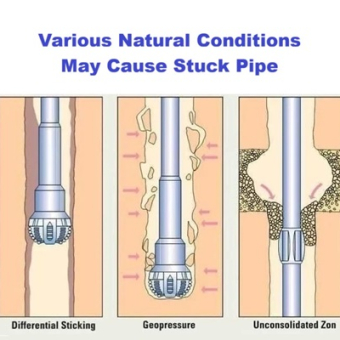
Stuck Pipe Prevention
Background: Stuck pipe is one of the most critical and costly problems in drilling operations across the Oil & Gas and Geothermal industries. With more complex well trajectories, smaller hole sizes, and an industry push to “drill to the limit,” the risk of stuck pipe incidents has grown significantly. Although rigs are now supported by…
Rp 10.950.000
Power Plant Performance Test
BACKGROUND: The main reasons to conduct a power plant performance test are: Identify the baseline performance of the power plant in different operating cases Quantify the prior/after performance improvement due to a major maintenance outage. Verify if the power plant meets the specifications of the applicable purchase contract, therefore if liquidated damages or “make good”…
Rp 7.950.000
Oil & Gas Contract Management: Analysis of the Various Types of Production Sharing Agreement
BACKGROUND: Industri minyak dan gas bumi merupakan sektor strategis yang menghadirkan tantangan besar dalam pengelolaan kontrak. Production Sharing Contract (PSC) adalah salah satu bentuk kontrak yang sering digunakan dalam kerja sama antara pemerintah dan perusahaan minyak serta gas bumi (Oil & Gas Contract Management). PSC dirancang untuk memastikan pembagian keuntungan yang adil sekaligus mempromosikan investasi…
Rp 14.500.000
Integrated Production Optimization of Oil & Gas
BACKGROUND: Dalam industri minyak dan gas, tantangan operasional yang kompleks seperti fluktuasi produksi, penurunan cadangan, dan peningkatan biaya operasional membutuhkan pendekatan terpadu untuk mengoptimalkan proses produksi. Pelatihan ini dirancang untuk memberikan pemahaman mendalam tentang konsep dan teknik integrasi dari reservoir, sumur, fasilitas permukaan, hingga jaringan distribusi. Dengan pendekatan ini, peserta dapat mengidentifikasi peluang peningkatan efisiensi,…
Rp 10.950.000
Manajemen Transisi Energi ke Arah Energi Terbarukan
BACKGROUND: Manajemen Transisi Energi (MTE) adalah program penelitian baru yang mengeksplorasi transisi energi dari berbagai sudut dan perspektif, menekankan pada aspek perilaku, strategi, teknologi, sosial, ekonomi, politik, dan aspek regulasi transisi menuju sistem energi yang lebih berkelanjutan dan tangguh. Transisi energi dianggap sebagai fenomena sistemik dan multi-level, di mana transisi tertanam dan tergantung pada hubungan…
Rp 7.950.000