 >
>- Selamat datang di website PT Fiqry Jaya Manunggal. Semoga anda senantiasa sehat afiat. Kami siap melayani anda

Risk Based Inspection (RBI)
Rp 7.950.000| Stok | Tersedia |
| Kategori | Maintenance, Production Operation, Q-HSE |
06 - 08 Juli 2026, Bandung
26 - 28 Oktober 2026, Bandung
Trainer: Ir. Deddy Nugraha and Team
Risk Based Inspection (RBI)
BACKGROUND:
Risk-based inspection (RBI) is the process of developing an inspection plan based on knowledge of the risk of failure of equipment. This is the combination of an assessment of the likelihood (probability) of failure due to flaws, damage, deterioration, or degradation with an assessment of the consequences of such failure. With RBI, you can improve safety and potentially reduce costs by optimizing your inspection strategy to focus resources on high-risk areas.
By attending this online course, participants will have a complete understanding of the RBI methods and knowledge to plan and carry out risk-based inspections.
OBJECTIVES:
- Understand the fundamentals of Risk-Based Inspection (RBI) and its application in asset integrity management.
- Learn to identify, analyze, and assess risks associated with industrial equipment and operations.
- Develop skills to prioritize inspections based on risk levels, focusing on critical assets.
- Gain knowledge of RBI methodologies and how to integrate them into existing inspection strategies.
- Improve decision-making capabilities through data analysis and risk assessment techniques.
- Ensure compliance with industry standards, codes, and best practices in RBI, including API 580/581.
- Reduce downtime and optimize inspection costs by targeting high-risk areas and avoiding unnecessary inspections.
- Promote a culture of safety and reliability in the workplace through risk-based strategies.
- Evaluate case studies and real-world applications of RBI to build practical insights for implementation.
RECOMMENDED PARTICIPANTS:
- Facilities inspection team members
- Maintenance technicians, supervisors, and engineers
- Oil and gas processing plant inspectors, supervisors, and engineers
- Facilities engineers and supervisors
- Production operation supervisors and engineers
- Drilling supervisors and engineers
- Pipeline inspector, supervisors, and engineers
- Quality and HSE officers
COURSE OUTLINE:
- Introduction to Risk-Based Inspection
- Risk & Inspection Terminology – Risk value, risk level, risk matrix, hazard, danger, failure, likelihood, consequence
- Hierarchy of Hazard Control – Elimination, substitution, engineering control, administration, Personal Protection Equipment (PPE)
- Understanding & Scope of RBI – Definition, purpose, and outcome of RBI, pressurized & non-pressurized equipment, un-inspect-able risk
- Overview of RBI Code & Standard (API 580 & API 581)
- Plant Database Source and Structure – Component of RBI datasheet, heading, plant condition, process flow diagram (PFD), piping and instrument diagram (P&ID)
- Qualitative RBI Analysis Level 1 – Screening system analysis, likelihood category, damage consequence category
- Likelihood of Failure and Methodology – Generic frequencies, equipment Modification Factor (FE), Management Systems Evaluation Factor (FM), adjusted failure frequency
- Consequences of Failure and Methodology – Hole size failure, Flammable Consequence, Toxicity Consequence
- Properties of the Base Resource Document (BRD) Representative Fluids – Normal boiling point, Molecular weight, density, calculation, examination
- Technical Modules Sub Factor (TMSF) – Thinning factor, Stress Corrosion Cracking (SCC) Factor, High-Temperature Hydrogen Attack (HTHA) factor, the mechanical fatigue factor
- RBI Analysis Level 2 – Semi-quantitative
- RBI Analysis Level 3 – Full-quantitative
- Development of Inspection Programs-Damage type, damage mechanism, inspection effectiveness, approach to inspection planning
ABOUT THE COURSE LEADER:
Ir. Deddy Nugraha and Team
Ir. Deddy Nugraha, menyelesaikan pendidikan sarjana dari Teknik Mesin – Institut Teknologi Bandung, yang kemudian mendalami bidang Power Plant (Gas Turbine, Steam Turbine, Pump & Compressor) khususnya di bidang Reliability, Quality, dan Maintenance Management. Berpengalaman sebagai Senior Propulsion Engineer di Universal Maintenance Center PT. IPTN (1991 – 2002) dan sekarang sebagai Reliability Engineer dan Professional Training Instructor. Pengalaman sebagai instruktur training adalah di PT. Tjiwi Kimia, PT. Suparma, PT. Indah Kiat Pulp & Paper, PT. Indonesia Power, British Petroleum, PT. Pertamina, PT. Krakatau Steel, PT. Amoco Mitsui, PT. Semen Gresik, Indocement Tunggal Prakarsa, PT. Puncak Jaya Power, Medco Energy dsb
Risk Based Inspection (RBI)

Production Safety System
BACKGROUND: Risks yang bisa terjadi pada semua fasilitas produksi oil/gas di darat dan di lepas pantai pada umumnya: kebakaran atau ledakan; masalah lingkungan, kerusakan alat produksi, & cedera pada orang atau personel. Tujuan dari desain sistem keselamatan produksi adalah untuk mengurangi risiko bahaya yang teridentifikasi ke tingkat yang wajar dan diantisipasi dengan baik. Pembahasan akan…
Rp 7.950.000
Fundamental Project Management
BACKGROUND: As an individual or as an employee, we often experience challenges in managing unique, non-routine (non-recurring) project activities that involve many parties. The challenges that are often faced are generally how to start and guide the project activities to be completed on schedule with the expected quality and efficient costs. The success of a…
Rp 7.950.000
Drilling & Completion Well Integrity
BACKGROUND: Well Integrity adalah penerapan teknis, operasional dan solusi secara terorganisasi untuk mengurangi resiko tidak terkendalinya siklus kehidupan suatu sumur migas dan menciptakan kondisi operasional yang optimum. Beberapa pengaruh dalam melakukan hal ini adalah kondisi sumur, kondisi lingkungan, dan kondisi peralatan yang dirancang dengan baik. Pemahaman secara advanced dari masalah Well Integrity, setidaknya harus mencakup…
Rp 12.950.000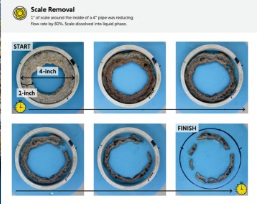
Pipeline Corrosion & Scale Integrity Management
BACKGROUND: Scale and Corrosion di lapangan Oil & Gas Field merupakan tantangan utama yang dapat mengurangi efisiensi operasi, meningkatkan biaya pemeliharaan, dan memperpendek umur peralatan. Scale terbentuk akibat pengendapan mineral di dalam sistem, sementara korosi merusak struktur material akibat interaksi dengan lingkungan yang agresif. Masalah ini tidak hanya memengaruhi produktivitas, tetapi juga membawa risiko terhadap…
Rp 7.950.000
Asset Performance Management
BACKGROUND: When it comes down to the nuts and bolts of industry success, nothing quite matches the importance of Asset Performance Management: Maximizing Equipment Efficiency and Reliability. In a world where operational downtime is not an option, ensuring your assets are running at peak performance isn’t just beneficial; it’s critical. Diving deep into making our…
Rp 7.950.000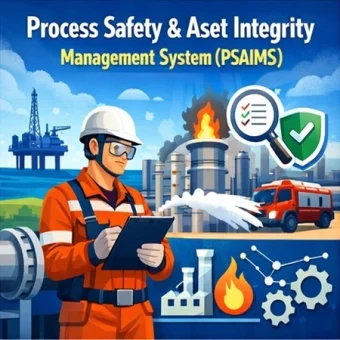
Process Safety & Asset Integrity Management System
Background: Process Safety & Asset Intergrity Management System, biasanya merupakan dua hal yang terpisah. Padahal keselamatan proses (Process Safety) dan integritas aset (Asset Integrity) merupakan fondasi utama dalam industri migas yang berisiko tinggi. Kegagalan pengelolaan kedua aspek ini bisa menimbulkan kerugian besar, baik dari sisi manusia, lingkungan, maupun bisnis. Process Safety & Asset Integrity Management…
Rp 7.950.000