 >
>- Selamat datang di website PT Fiqry Jaya Manunggal. Semoga anda senantiasa sehat afiat. Kami siap melayani anda

PSC Business & Profit Sharing Funds
Rp 14.950.000| Stok | Tersedia |
| Kategori | 100+ Pelatihan Engineering & Migas Profesional 2026 | Sertifikat Resmi, Oil & Gas |
Trainer: Benny Lubiantara
Bandung, 24-26 June, 2026
Bandung, 12-14 Oktober, 2026
PSC Business & Profit Sharing Funds
Background:
Production Sharing Contract (PSC) is the most widely used contractual framework in the oil and gas industry to regulate the relationship between host governments and contractors. Under this scheme, in the upstream oil & gas business Government retains ownership of natural resources, while contractors are entitled to recover costs and share profits according to agreed terms.
Understanding PSC business mechanisms—particularly cost recovery, profit sharing, and fund allocation—is critical for professionals involved in planning, operations, and decision-making. Misinterpretation of PSC clauses may lead to inefficiencies, financial disputes, and suboptimal project economics. This training provides a practical and structured understanding of PSC business fundamentals, with emphasis on profit sharing funds and their commercial implications.
Objectives:
• Understand PSC principles and contractual structure
• Explain cost recovery and profit sharing mechanisms
• Interpret PSC fiscal terms and fund allocation
• Analyze business implications of PSC clauses
• Support operational and commercial decision-making under PSC framework
Recommended Participants:
• Non-finance & non-commercial professionals
• Engineers, Supervisors, Project Managers
• Business Development, Operation, and Asset Team
• Government / Regulator liaison officers
Course Outline:
PSC Fundamentals & Business Framework
1. Introduction to Production Sharing Contract (PSC)
• History and evolution of PSC
• Comparison with concession & service contracts
• Roles of government, contractor, and regulator
2. PSC Legal & Commercial Structure
• Key PSC clauses and terminology
• Contractual rights and obligations
• Duration, work commitment, and relinquishment
3. PSC Business Flow Overview
• Revenue generation in upstream activities
• Cost elements in exploration and production
• Relationship between operations and PSC economics
4. Gross Revenue & Cost Recovery Concept
• Definition of gross revenue
• Eligible vs non-eligible costs
• Cost recovery ceiling and limitations
Profit Sharing & Fiscal Mechanism
1. Cost Recovery Mechanism in Detail
• Capital and operating expenditures (CAPEX & OPEX)
• Depreciation and amortization principles
• Audit and approval process
2. Profit Oil / Gas Sharing Mechanism
• Profit oil vs profit gas
• Government and contractor split
• Sliding scale and variable sharing
3. First Tranche Petroleum (FTP)
• Purpose and calculation
• Government and contractor FTP share
• Impact on contractor cash flow
4. Taxes, Bonuses, and Fiscal Obligations
• Income tax treatment under PSC
• Signature, discovery, and production bonuses
• Domestic Market Obligation (DMO) concept
Profit Sharing Funds & Business Implications
1. Profit Sharing Funds Allocation
• Government take vs contractor take
• Central and regional government allocation
• Special funds and earmarked revenues
2. PSC Economics & Business Decision Impact
• PSC impact on project feasibility
• Sensitivity to oil & gas price fluctuation
• Cost efficiency and profitability drivers
3. PSC Business Risk & Common Issues
• Cost overrun and recovery disputes
• Regulatory and fiscal changes
• Commercial risk from PSC interpretation
4. Case Illustration & Practical Insights
• Simplified PSC cash flow illustration
• Profit sharing calculation example
• Lessons learned from PSC implementation
Training Method
• Interactive lecture
• Conceptual explanation with examples
• Practical discussion based on real PSC structure
Expected Outcomes
• Clear understanding of PSC business logic
• Ability to read and interpret PSC profit-sharing clauses
• Improved collaboration between technical and commercial teams
About The Course Leader:
Benny Lubiantara
PSC Business & Profit Sharing Funds
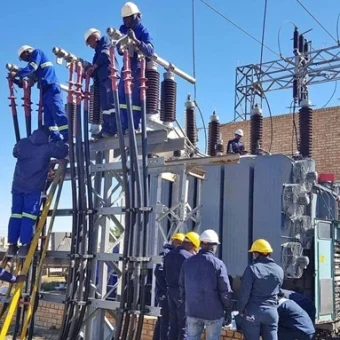
Transformer Maintenance & Operation
DESKRIPSI: Electric Transformer merupakan salah satu peralatan yang penting dalam industri. Apabila terjadi kerusakan maka akan menimbulkan dampak berkepanjangan dalam sebuah proses industri. Oleh karena itu diperlukan maintenance (perawatan) yang tepat dan berkala agar Electric Transformer tersebut bekerja dengan baik. Melalui pelatihan ini, peserta akan mempelajari tentang prosedur perawatan Trafo yang aman dan tepat. Pelatihan…
Rp 7.950.000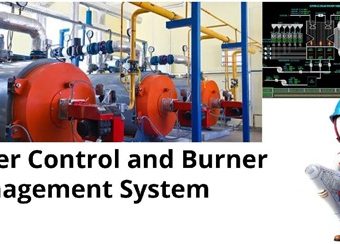
Boiler Control & Burner Management System
OBJECTIVES: Participant will be able to: Understand the benefit of improved boiler process control and saving as result of improved efficiency Develop proper control system documentation Apply principles and methods for flow level measurements to improved boiler operations Specify appropriate strategies for flow, level and pressure control Tuning of boiler control system Implement analyzer measurements…
Rp 7.950.000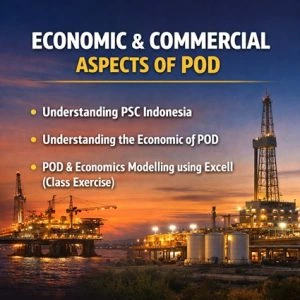
Economics & Commercial Aspects of POD
Background: Plan of Development (POD) of oil & gas fields represents a very complex problem and involves huge amounts of investments. POD is also one of the main business processes in Indonesia PSC besides Work Program & Budget (WP&B) and Authorization for Expenditure (AFE). Understand POD mechanism is very importance for anyone working on oil…
Rp 14.950.000
Extended Reach Drilling (ERD)
BACKGROUND: Pelatihan Extended Reach Drilling (ERD) ini akan difokuskan untuk meningkatkan pemahaman peserta tentang desain dan aspek operasional dan design pada Extended Reach Drilling. Dengan tujuan khusus kegiatan operasi pemboran yang rumit dan menggunakan sudut inklinasi yang tinggi dan Panjang horizontal displacement yang sangat panjang menimbulkan problem tersendiri pada kegiatan operasi nya seperti pipa terjepit,…
Rp 14.950.000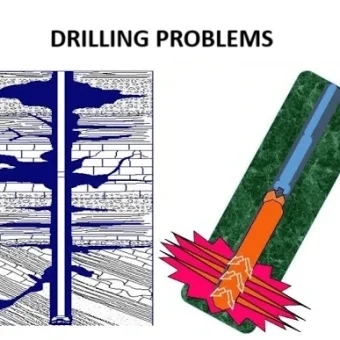
Drilling Problem Analysis
BACKGROUND: Pengeboran sumur minyak dan gas sering kali menghadapi tantangan yang tidak terduga, meskipun telah dilakukan perencanaan yang matang. Drilling Problem Analysis adalah kunci keberhasilan operasi pengeboran, yang melibatkan kemampuan untuk mengidentifikasi dan mengantisipasi potensi masalah serta merancang program pengeboran yang efektif. Pelatihan ini dirancang untuk membekali peserta dengan pengetahuan mendalam tentang analisis masalah pengeboran,…
Rp 14.950.000
Training dan Sertifikasi BNSP: Pengendalian Pencemaran Udara
BACKGROUND: Penanggung Jawab Operasional Instalasi Pengendalian Pencemaran Udara (POIPPU) adalah personil yang memiliki tugas dan tanggung jawab terhadap penyusunan rencana, pengoperasian dan pengoptimasian pengoperasian peralatan pengendalian pencemaran udara, perawatan peralatan pengendalian pencemaran udara, serta melaksanakan tanggap darurat dalam pengendalian pencemaran udara. Peraturan POIPPU: Berdasarkan Peraturan Menteri Lingkungan Hidup Dan Kehutanan Republik Indonesia Nomor. P.6/MENLHK/Setjen/Kum.1/2/2018 Tentang Standar…
Rp 8.950.000